Field guide / Power, water and heat
Off-Grid Systems in Practice
A disconnected electricity supply is not the same thing as independence. Understand what the cabin produces, what it stores and what still needs to be brought in.
Ask what “off-grid” actually covers
The phrase can describe a building with no mains electricity connection while saying nothing about heating fuel, drinking water or waste treatment. Some retreats combine solar electricity with delivered gas or firewood. Others use a generator during low-generation periods. These arrangements may be practical, but they should be described clearly rather than hidden behind a general promise of self-sufficiency.
Begin by separating services. Where does electricity come from? What produces space heat and hot water? How is drinking water supplied and verified? Where do sewage and greywater go? A single label cannot answer all four. A quiet room might also rely on pumps, treatment equipment and batteries located elsewhere on the site.
For guests, the most useful information is operational: which appliances are available, what can run at the same time, whether there are charging limits and what changes during poor weather. Clear limits are not evidence of a failed retreat. They are evidence that finite resources have been recognised.
Follow the electricity from source to use
- Generate
Panels produce electricity when conditions allow. - Manage
Control equipment regulates energy flow. - Store
Batteries hold a limited usable reserve. - Convert
An inverter may supply household alternating current. - Use
Lights, pumps and appliances draw from the system.
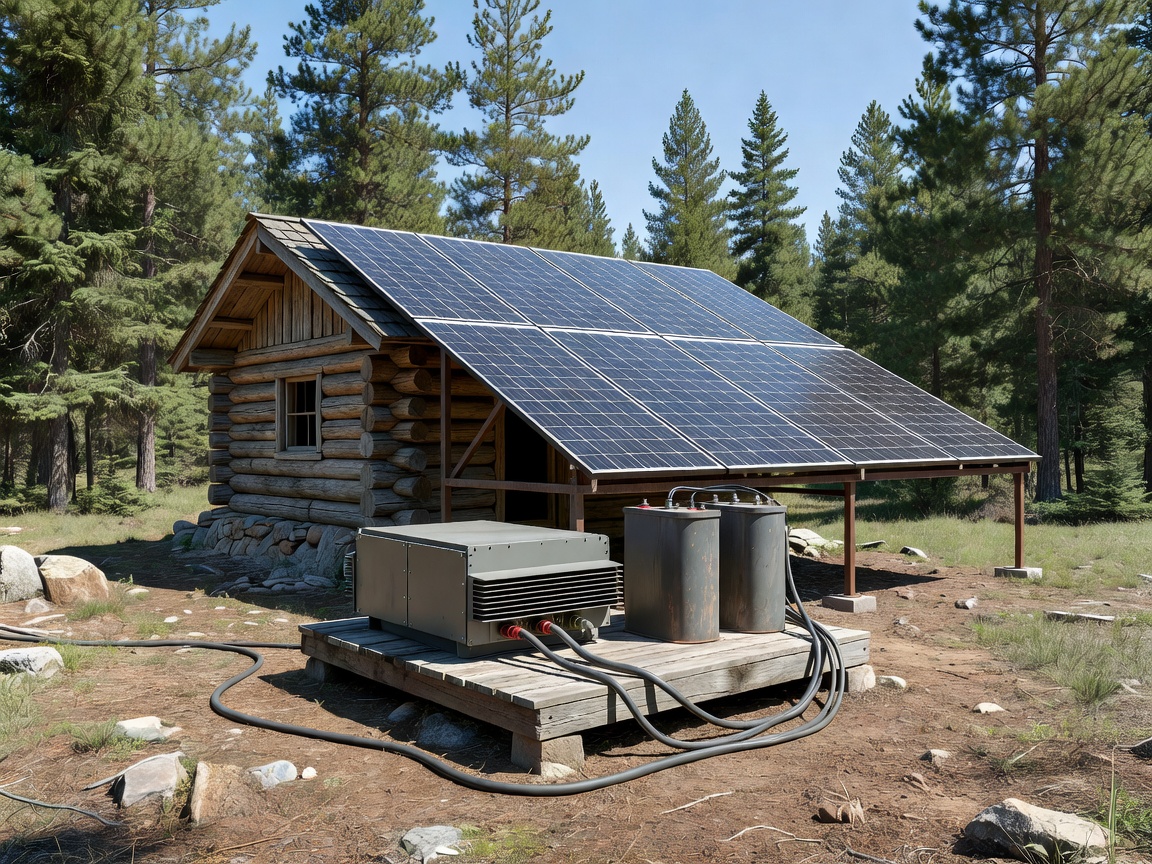
This diagram is conceptual, not a wiring instruction. Actual arrangements vary. Panel power is commonly stated in kilowatts, while stored energy is commonly stated in kilowatt-hours. Those quantities answer different questions. A large panel array does not tell you how long a battery can support a particular load, and a battery’s headline capacity may differ from its usable operating capacity.
A practical discussion also includes conversion losses, battery temperature, system protections and essential loads. Refrigeration, controls and water pumps may need power even when guests are not actively using appliances. Ask the operator about normal service, not just maximum equipment ratings.
Winter changes both sides of the equation
At high latitudes, winter brings shorter days and, in some locations, a period when the sun does not rise. Snow cover, shading and local weather can further reduce solar output. At the same time, colder conditions can increase demand for heating and freeze protection. A system that works comfortably in summer cannot be assumed to perform the same way in winter.
Heating is especially important to separate from lighting. Supplying modest electrical loads is a different task from maintaining indoor temperature through prolonged cold. A well-insulated building can reduce demand, but it does not create energy. Wood, gas, liquid fuel, grid backup or other sources may still be involved, depending on the property.
For background on the variation of solar resources by location, the European Commission’s Photovoltaic Geographical Information System provides modelling tools. Modelled output is not a guarantee for a particular cabin or trip. Site surveys, operating records and professional design remain necessary.
Water and waste complete the picture
A clear stream is not proof of safe drinking water. Supply may come from a treated borehole, a managed collection system or deliveries. Ask what is potable, whether treatment depends on electricity and whether guests need to bring water. In freezing conditions, protecting pipes and maintaining access to the supply can become a substantial part of the operation.
Toilet arrangements vary widely. A dry toilet, composting system or holding tank has specific servicing needs and user instructions. “Composting” does not mean that all waste immediately becomes harmless, nor does a remote location justify discharge to the surrounding land. Greywater from showers and sinks also needs an appropriate route.
Your comfort depends on these ordinary details. Limited hot water may mean shorter showers, a scheduled sauna session or shared facilities rather than a private bathroom. Choose the arrangement you genuinely want, then respect the operating limits. A more transparent description is worth more than an expansive claim of total independence.
Consider the wider footprint